The Alienist

The Alienist
By Caleb Carr
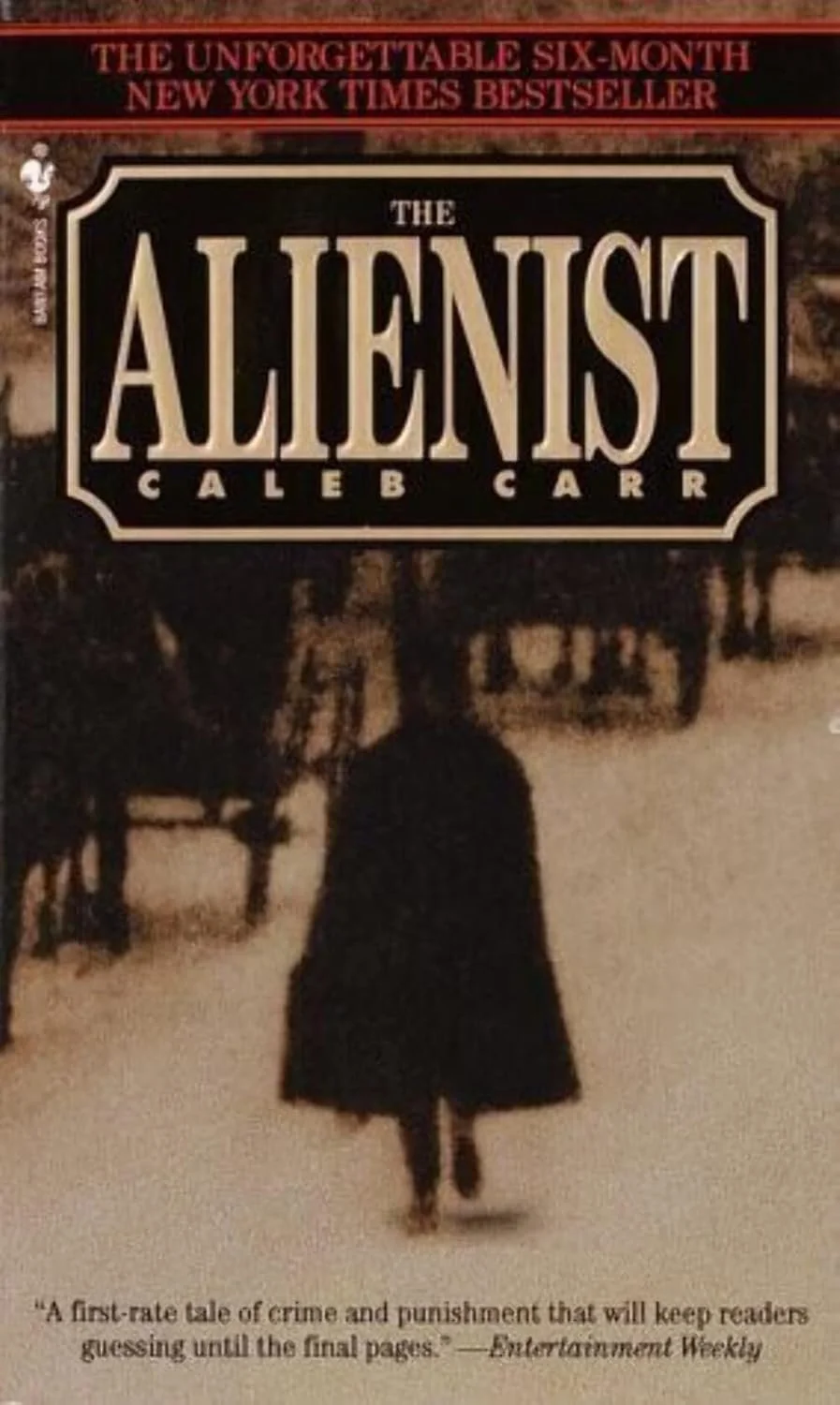
In the summer of 1944, a body was found in the Hudson River. The investigation eventually led the police back to a man named Lucien Carr, a writer who was friends with Jack Kerouac. The victim, Lucien Carr’s former scoutmaster, was said to have been enamored with Carr and made an improper advance. This resulted in Carr stabbing the man with a pocket knife and disposing of the body. Jack Kerouac hid the knife. Carr was sentenced to two years of imprisonment and Kerouac sentenced to a few days of jail time. While this remains a forgotten case—another murder in New York City’s grisly history—the case itself inspired Carr’s son, Caleb, to write a novel.
This novel was The Alienist.
I admit that this is my second time reading this book. The first time I read it, a professor at VCFA had recommended it to be included in my critical thesis. But this time was just as special because it’s the kind of novel that isn’t pigeon-holed into one specific cliché. It’s a literary horror novel which also fits into the realm of historical fiction. Published in 1994, it follows the investigation into the gruesome murders of boy-whores in turn of the century New York, using the most cutting-edge psychological profiling of the time period to solve the crimes. This makes it a cross between The Silence of the Lambs and an almost-retelling of Jack the Ripper. A truly unique piece of fiction.
What I found most interesting about this work was its tight thematic patterning—the idea of violence and darkness being passed from one generation to the next. And the concept that a whole lower class of civilians may be disregarded in comparison to the rich and sophisticated. Carr’s vision and area of focus elevate this novel to what Donald Maass describes as a breakout status in his book Writing the Breakout Novel. That is, by definition, a text which is multilayered and presents an intricate plot enriched with the deeper workings of conflict and characterization.
But the conflict and thematic patterning are not the only rich pieces of this text. Carr successfully breaks down historic fact of the time period into small pieces, creating a setting which becomes another character by itself. Combined with skillful depiction of real-life historical figures as part of the cast of characters, Carr takes what could be a good novel and makes it an even greater novel. The mark of true skill in a first-time novelist.
Where Carr falters, however, is in his execution of the climax. Where he has more than enough momentum to go for the gold and create a powerful climatic scene, he chooses to downplay it. Almost as if he hesitates when the action ignites. If he would have given it perhaps another edit for that chapter alone, I feel like this novel could have been even more powerful. Its excitement that much more thrilling. But for a first-time novelist, Carr gave it a hell of a try.
The Alienist is the kind of novel which leaves a lasting impression. Its level of literary intensity is exactly the kind of level any writer should strive to obtain, as it encompasses many of the elements Maass details for a truly successful book. I’d like to recommend this work to any writer looking for a lesson in what kind of intricacy to strive for or anyone looking for a slightly different take on the serial killer cliché.