The Witching Hour

The Witching Hour
By Anne Rice
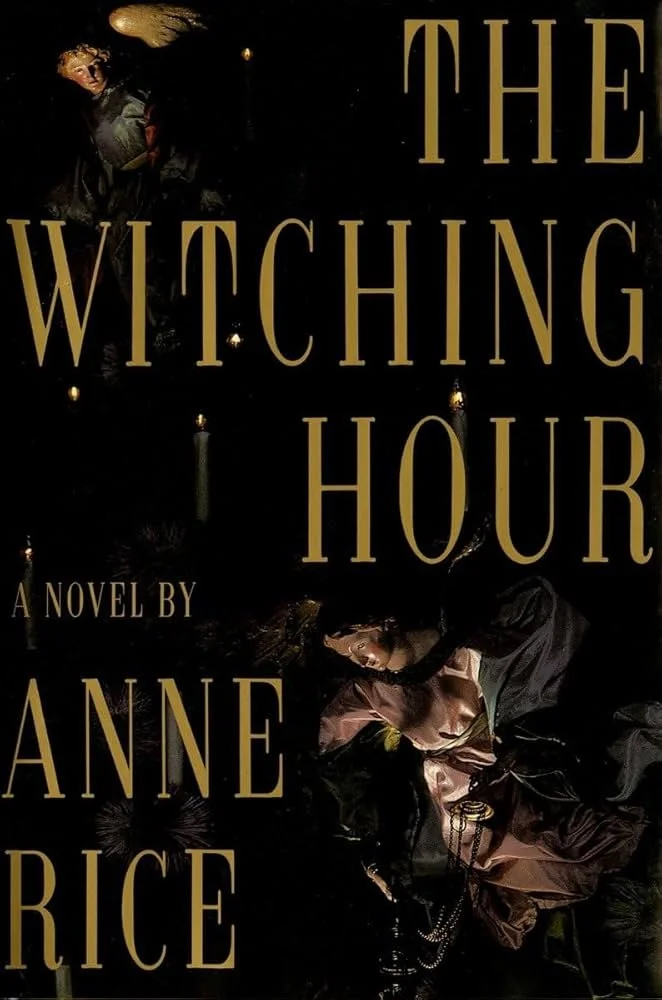
After a period of reading, I finally finished The Witching Hour by Anne Rice, and I’m reminded again why it’s one of my favorite novels of all-time. The first time I had read it was in high school, and I was so captivated with its writing that I couldn’t help but write Anne Rice to ask her about the origins of her characters and approach to fiction. Sadly, Anne Rice has since passed away since then (this was over ten years ago, mind you), but at least we have her words.
For those of you who have never heard of this novel, The Witching Hour follows the story of the Mayfair family, a line of witches who reside in the Garden District of New Orleans. Upon the death of the death of the current witch, her estranged daughter, Rowan, returns home to reconnect with her family and accept her place as next in line. And that’s just the beginning. Intertwining multiple plot lines of romance, moral reflection, and family history, Rice creates a richly complicated story that spans hundreds of years and begs the reader to consider the concept of free will.
Unfolding slowly, this novel is a slow take-off. But although it may take a while to introduce the rich backstories of its characters, the slow burn proves worth it in the end. When it finally reaches the first few chapters with Rowan, the novel begins to take shape and reveal its thematic patterning in such a way that it’s impossible not to be hooked. Rice offers a wealth of backstory for every character that the reader’s sympathy is readily given, and by the time the book returns once more to present day New Orleans, the reader is on Rowan and Michael’s side.
But while the reader may be hoping for a positive outcome, the trajectory of the tale is slightly predictable when you’re considering the thematic patterning at work. Even as someone who already knew what happened in the end, I still found myself hoping things would be different. That maybe, perhaps, free will would prevail in a positive manner to overcome tragic circumstances. And I think the power of Rice’s characters is what drives that, as they demonstrate time and again to the reader throughout the tale that everyone has the power to do good or evil. That hope in change and faith in others is what not only keeps us striving but inspires us even in the darkest of circumstances.
Without telling all of you what happens, I have to say this ending broke my heart the first time I read it. And while it did this time, as well, I also find it inspiring. Because it’s laced in beautiful thematic passages that further drive this point home. Rice shows us both the power of good and the power of evil, as well as teaching us that redemption is always possible if we simply choose to walk in the light of good. No matter how heart-breaking the ending is, I personally find that inspiring.
If there’s any faults in Rice’s craft in the structure of this novel, I’d have to say that it’s in her execution. While I’ve mentioned before that The Witching Hour is a powerful slow-burn, Rice doesn’t always help fuel its fire. Right as the novel truly gets going, she inputs nearly three hundred pages of family history into the novel. While it’s effective in a way to focus the reader’s attention on the truly rich history of the Mayfair clan, it bogs down the fire of the fiction into a smolder. Until the reader is left wondering if or when we’ll return to the current story.
Such rich backstory is the mark of a detailed writer, but the way that it’s executed says a lot about the story itself. While the Mayfair file was cumbersome and very slow moving at parts, it’s important to note that this is the kind of novel which deals so heavily with personal history that to cut any of it would make the structure fall apart. If I had been Rice, I would have preferred to break down the history into slightly smaller sections, incorporating more of the present timeline so that the text’s pacing would not be overly hindered. And that the point of such history may be more powerful to the reader. Making the story more inviting.
Regardless, Rice’s novel The Witching Hour is a brilliant example of how horror fiction may be blended with the fine subtleties and intense character studies of literary fiction to create a gripping masterpiece of both hope and tragedy. I’d recommend this novel to any writer looking for guidance on characterization and theme. Or anyone looking to lose themselves in a beautiful read.