Wishful Drinking

Wishful Drinking
By Carrie Fisher
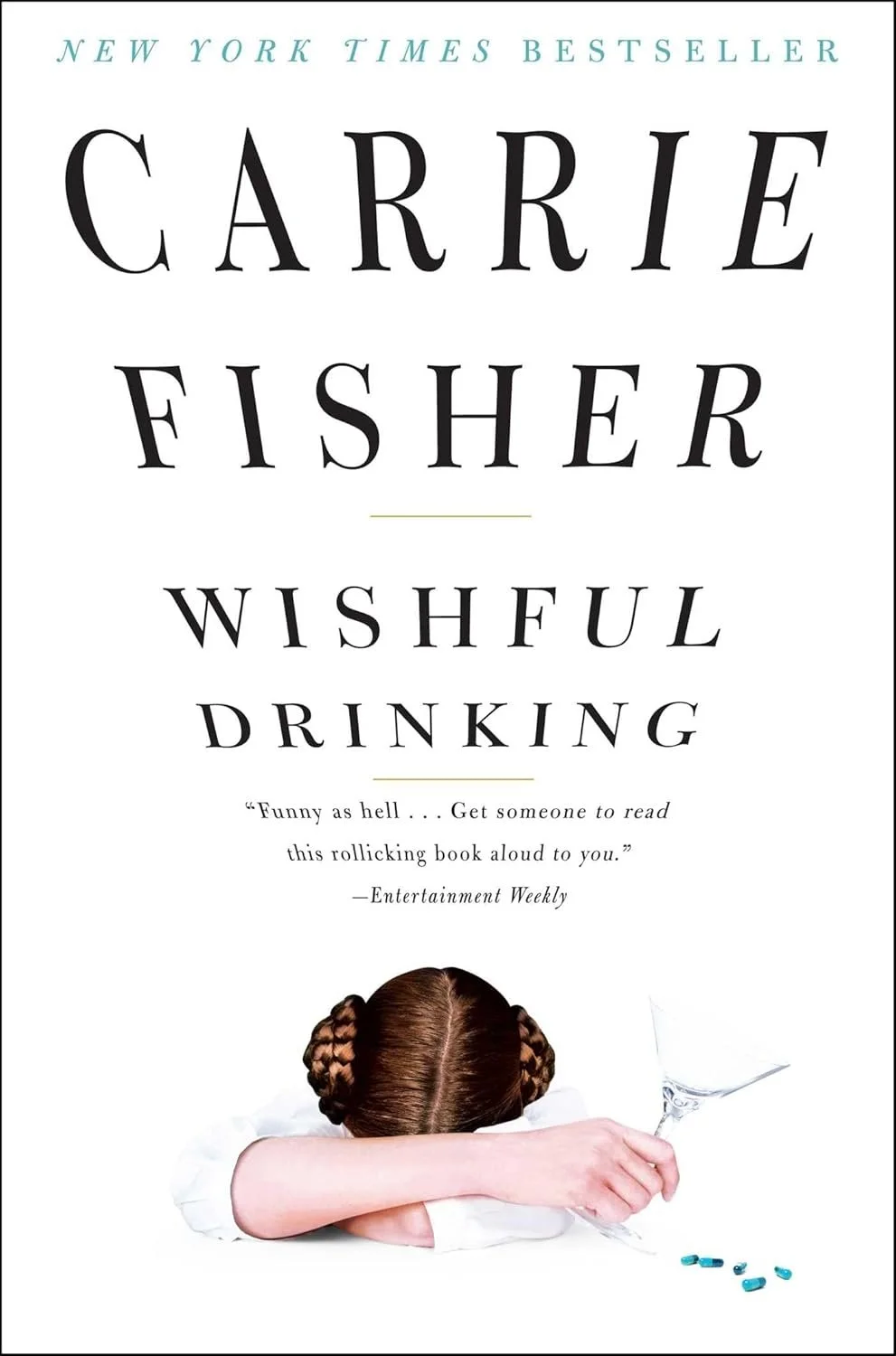
Last night, I decided to read Carrie Fisher’s memoir Wishful Drinking again. The first time I had read it, I read it in one night. This time was no different. I simply couldn’t put it down again.
Reading the first page was difficult at first given the way the book is written, as it follows no typical structure and none of the traditional rules of writing (such as “kill the adverbs”). But when I discovered this was originally developed as a one-woman show, it made more sense. While this memoir translates pretty well into written format, its narrative style probably would have been seamless if I had seen it live.
That being said, the more I became acquainted with Fisher’s style and the subject matter, the structure made sense for a completely different reason. That is this: the memoir has to be a mess because, in the natural order of things, isn’t life a mess in itself? And if life is naturally messy and non-conformed to the traditional order of what we’d think of in terms of plot structure (rich with tangents and side-plots and momentary vignettes of experiences and temporary characters), how do we capture the feel of the truth in a way that makes sense? The answer is that there is no “clean” way to do it, making Fisher’s collage of storytelling befitting for the content—her life.
This is especially true given how Fisher prefers to describe her experiences in the text, as the events themselves are out of chronological order and just seem to work somehow. It makes the literary experience of reading about her life and struggles seem more like a warm, deep conversation you might have while getting to know a new friend rather than a formal history of life—a form of writing that I’ve always found a bit odd save for a few narrative voices.
Fisher’s narrative voice comes across as not just hilarious but true to character. There’s a degree of realism to her diction that her story comes across as true without any doubt. The reader believes what she has to say because she doesn’t hold back. And she tells the story how she’d tell you in-person. I believe this is important for any writer to capture, as it holds the kind of natural feel which makes a reader feel comfortable. It’s definitely the kind of reliability I attempt to construct in my fiction, at least.
Wishful Drinking remains to be a powerful, hilarious, reflective experience packed into a very few number of pages where you will feel like you know a lot about Fisher by the end. I can only say that, to Debbie and everyone who knew her personally, Carrie must have been an incredible woman to know. I look forward to reading more of what she had to say in the future.