Conquering Writer's Block and Summoning Inspiration: Learn to Nurture a Lifestyle of Creativity
Conquering Writer's Block and Summoning Inspiration:
Learn to Nurture a Lifestyle of Creativity
By KM Weiland
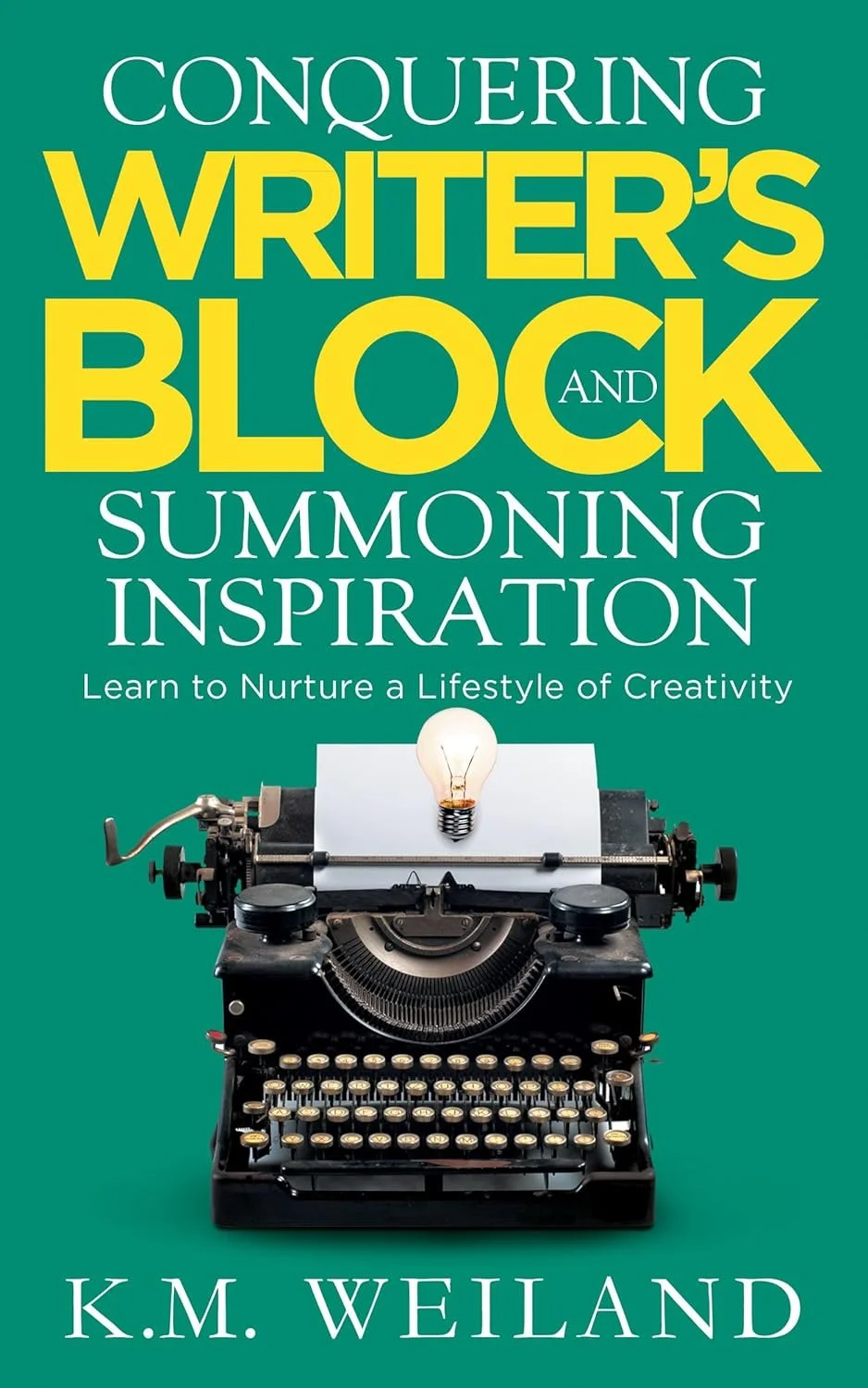
Throughout my latest literary adventures, I finally read a craft book which had been on my reading list for quite some time simply because I was only able to find the audiobook version. While I’m not against audiobooks per-se (I’ve certainly listened to a few in my time if I’ve come across a copy that was far cheaper than a copy of the physical book.), when it comes to craft books, there’s something to be said about having the actual book to read. I’ll often make notations (sometimes writing right on the page) and use Post-It Notes to bookmark sections I feel are of vital importance. It’s just the odd way my brain works when it comes to thinking about craft. That’s why it had taken me years until I finally decided to break down and acquire the audiobook version (which is the only version available, to my knowledge) of Conquering Writer's Block and Summoning Inspiration: Learn to Nurture a Lifestyle of Creativity by KM Weiland.
And it must be said; my only regret now is that I’d waited this long.
For those who might have missed a previous review I’d done of another Weiland craft book titled Structing Your Novel: Essential Keys for Writing an Outstanding Story, all her craft books are part of a series she wrote in effort to help both beginning and struggling writers. This one in particular conquers the topic of writer’s block, featuring multiple strategies a writer might try to break free of their “non-writing funk” and engage their creative energies into productivity. Right now, being in the midst of the last (exciting) quarter of my latest novel manuscript, with neither a non-writing funk nor a writer’s block, I was curious to see what advice Weiland had to offer that might give me a different outlook on the creative process.
From the start, I found that both Weiland and I seemed to align on a single core value: that writer’s block does not exist. Rather that only a stagnation caused by lack of creative momentum is what someone believes is a creative block. I’ve sat through countless workshops—both academic and devised by writing groups—where I’ve listened to more than a few writers complain about not having anything worthy to write about. While I have typically refrained from commenting during these situations in order to be polite, there has always been a part of me that just wanted to demand how someone could find this possible. Twelve writers may assemble and be told to write the same, basic story. But I can guarantee you that each of them will view the circumstances in different ways, approaching the conflict in a manner that is unique to their vision. That’s just writing. In short, as Weiland beautifully puts it in this craft book, “It’s not the lack of ideas but rather having too many ideas that it’s overwhelming to choose which one deserves your current focus.”
I felt this was crucial for many writers to understand, as it lays out the backbone of this book. Taking the enormous task of focusing your creative energies and breaking it down so the task doesn’t feel so “blocking.” All her advice in this book hinges on the idea of getting the writer to a point where they’re making progress, only to delve deeper into different strategies on how to maintain progress once the writer begins.
While some of the habits she suggested were ones that I felt were common sense and ones that I already try to employ, there were some wonderful strategies I hadn’t considered. Ones that were so common sense I couldn’t believe I’d overlooked them. I don’t want to spoil it for anyone, but my ultimate favorites were the ideas of keeping a book/journal of ideas and playing movie musical scores as background music while you work. Those concepts being to purge your memory of needing to recall every idea you have and to challenge yourself in approaching the construction of a fictitious scene from the perspective of something that doesn’t fit (such as a battle scene set to the background noise of a love theme). This book offers a wealth of strategies on how to both put your conscious and subconscious to use while allowing your mind the breathing room it requires to function at its highest efficiency. Since reading this book, I’ve enacted a few of the strategies Weiland outlines and noticed a degree of improvement in the quality of my own novel manuscript.
My only gripe—besides the fact that this book was not available in physical form—was that it was so short. The audiobook is only an hour or two long—enough to pack a hell of a punch but also enough for the writer to be left wanting a little more from certain chapters. That being said, if you’re like me, you’ll most likely find yourself pausing it every few minutes to jot down something you find interesting or notate a reflection you have to what is being said. Overall, it gets the job done in a beautiful manner, and perhaps my favorite part talks about the problems with word count goals (something I personally would have wanted her to delve into further).
All in all, if you’re looking for some quality ideas on different approaches to the writing process, I’d highly recommend Conquering Writer's Block and Summoning Inspiration: Learn to Nurture a Lifestyle of Creativity by KM Weiland. This especially goes for beginning writers (potentially undergrad students) who are trying to find what creative process best works for them. No process is ever perfect, so my impression is that it can’t hurt to consider a new approach. The worst that might happen is that you find out what doesn’t work for you.
Till next time, happy writing, folks!